
Hospital to Home.
Helping participants move from hospital into safe, stable homes through coordinated transitions of care and continuity of support for complex needs.

Why it matters
Bridging the gap from hospital beds to safe homes.
Too often, people with disability remain in hospital far longer than necessary—not due to medical need, but because there is nowhere safe for them to go once discharged. Plan and Grow steps in during this critical transition of care to ensure no one is left behind by:
- Mitigating the risk of harm: A transition is a high-risk period for medication errors and service gaps. Plan and Grow proactively manages these risks by ensuring all health-related support plans and safety protocols are ready before the move.
- Ensuring continuity of support: To prevent dangerous interruptions in care, we act as the bridge between hospital clinical teams and home life. We ensure that every specialist instruction is translated into a reliable, daily support routine.
- Securing long-term stability: A successful discharge is about more than just a move; it’s about a permanent return to the community. We ensure the home environment is fully prepared for complex needs to stop the cycle of hospital readmission.
We’re known for stepping in when others step away. We don’t avoid complexity — we specialise in it.

Tailored for complexity
Who this service supports.
We understand that a hospital stay is only one part of a much larger journey. Our Hospital to Home Program specialises in supporting individuals who deserve a safe, dignified return to independence, ensuring that even the most complex health needs are met with compassion and expert oversight.
- Participants left without support: People who have been dropped by a previous provider and are currently waiting in hospital with nowhere safe to go.
- Families at breaking point: Individuals returning from psychiatric or medication reviews whose families can no longer safely provide the level of care needed at home.
- People with evolving needs: Anyone whose medical or behavioural situation has changed and now requires a more specialised or secure environment to stay safe and well.
How Plan and Grow helps
Our role in your hospital discharge team.
Plan and Grow works as the essential link between the hospital ward and a life back in the community. By collaborating closely with clinical staff, families, and support coordinators, the team manages every step of the transitional care.
Plan and Grow’s responsibilities include:
- Attending case conferences and planning meetings to keep the discharge moving forward without the usual delays.
- Quickly identifying the specific supports and housing needed to make sure the move home is safe and sustainable.
- Facilitating urgent NDIS plan reviews or requests for additional supports.
- Sourcing the best housing options, whether that’s an interim stay or moving straight into long-term SDA or SIL.
- Finding the right support workers and allied health providers to ensure the participant is well-supported from the moment they leave.
- Implementing interim support plans to provide safety and peace of mind while long-term arrangements are being finalised and secured.

The NDIS supports we coordinate for a safe transition.
We provide or coordinate a wide range of supports based on each individual’s unique needs.
Supported independent living (SIL)

True recovery begins in a place where you feel completely at ease. We coordinate Supported Independent Living to provide not just a house, but a stable, long-term home where professional staff are available 24/7. This ensures you have the consistent assistance needed for daily life—be it personal care or household management—facilitating a permanent return to the community and significantly reducing the risk of hospital readmission.
Specialist Disability Accommodation (SDA)

For those with complex functional impairment or very high support needs, the physical environment is a critical component of safety. We source Specialist Disability Accommodation that features custom-designed accessibility and safety protocols tailored specifically to your physical requirements. By matching you with a home that "thinks" the way you need it to, we empower you to regain independence in a non-clinical environment.
Short-term transitional accommodation
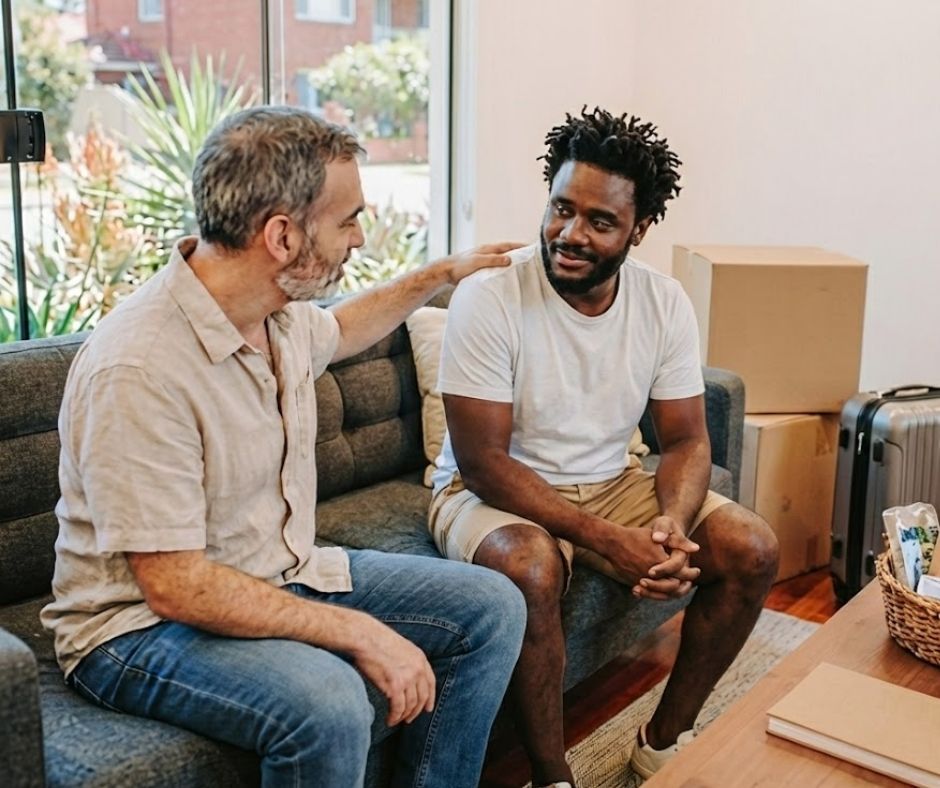
A transition of care should never be rushed or compromised by a lack of housing. We arrange secure short-term transitional accommodation to act as a vital bridge while your permanent home arrangements are being finalised. This ensures you are never left in a high-risk situation, providing a safe, stable home environment immediately upon discharge so that your recovery remains the primary focus.
In-home nursing and complex care

The medical journey doesn't end at the hospital doors. To prevent dangerous interruptions in care, we coordinate high-level in-home nursing and complex care. From advanced wound care and medication management to specialised diabetes support, we ensure that every specialist instruction from your hospital discharge team is translated into a reliable daily routine at home.
Behavioural supports

A successful discharge involves the mind as much as the body. We implement evidence-based specialist behavioural strategies designed to help stabilise behaviours and support emotional recovery post-discharge. By proactively managing these risks, we create a calm, predictable home atmosphere that fosters long-term psychological wellbeing and community integration.
Daily living assistance

Independence is often found in the small, daily victories. We organise practical, hands-on daily living assistance to help with personal care, meal preparation, and essential home tasks. This support is meticulously planned to help you regain your autonomy at your own pace, ensuring your home is fully prepared to meet your complex needs.
Transport and community access
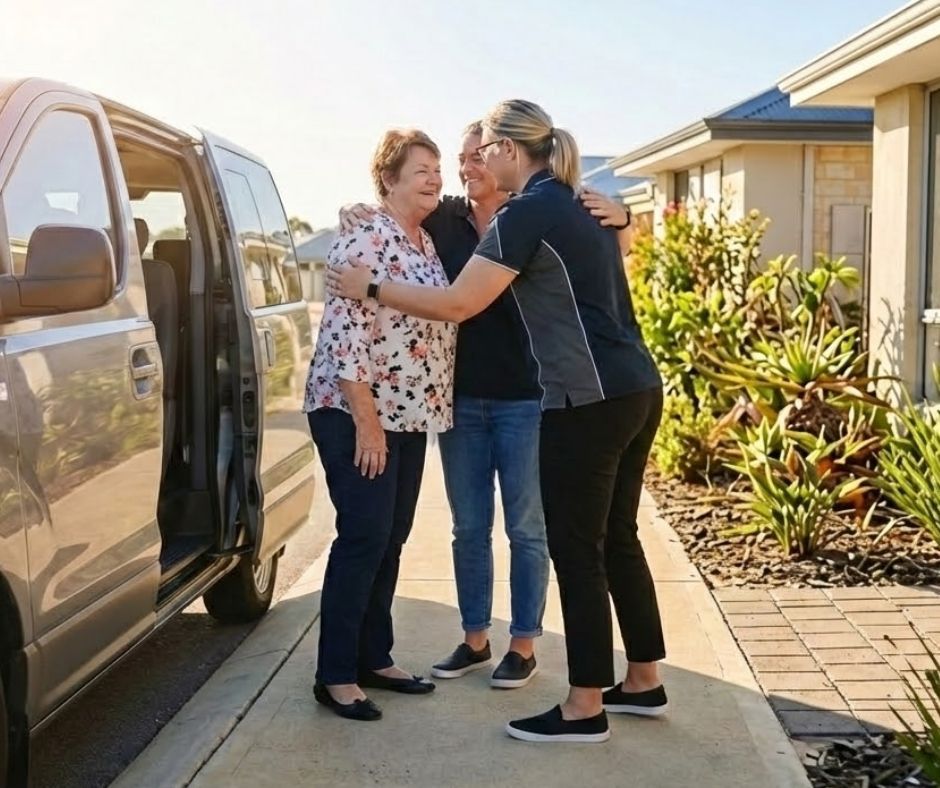
Stability is reinforced when you feel connected to the world around you. We ensure you have reliable transport and community access so you can attend vital medical appointments, manage grocery shopping, and begin the vital process of reconnecting with friends and family. This is the final, crucial step in ensuring no one is left behind and that your transition leads to a fulfilling life within the community.
We're with you.
Our commitment to every participant includes...
Urgency and reliability
We understand hospital discharge schedules and work within tight transition of care timelines to ensure no one is left waiting in a ward.
Clinical partnerships
We maintain strong relationships with the NDIA, hospitals, and clinicians—speaking their language to ensure a smooth, professional handover.
Person-led care
We take a trauma-informed approach, building every support plan to respect each participant’s unique history, wishes, and capacity.
Specialists in complexity
We’re known for stepping in when others step away. We don’t avoid complexity — we specialise in it.

For support coordinators & discharge planners.
We know how challenging it can be to manage a complex discharge under pressure. Many coordinators don't realise how quickly we can respond, or how flexible the NDIS can be with interim and urgent support options. Let us help you navigate the process to ensure a successful transition of care.
We’re here to help if you’re working with someone in hospital who:
- Has no safe destination available: For those who are medically ready to leave but have no appropriate home or support waiting for them.
- Can’t return to their previous home: For individuals whose situation has changed so significantly that their old provider or family can no longer support them.
- Lacks a community support team: For participants who are fit for discharge but need a specialised team on the ground to ensure they stay safe and well once they leave hospital.
How to get started
We’ve made our referral process as simple as possible so we can begin supporting your transition of care without delay.
Step 1
Reach out to us.
Call us on (08) 6444 9682, submit a general enquiry online, or jump straight to our referral form.
Step 2
Collaborative planning.
We’ll meet with the participant, hospital staff, family, and any existing supports to understand what’s needed.
Step 3
A safe transition home.
We secure the necessary housing and support, then continue to evolve the plan as the participant settles into the community.